Growing Onions from Seed: My Season Recap, Harvest Results & What’s Next!
Over the last few seasons, growing large, abundant onion bulbs has been a bit of a challenge for me. But this year, I decided to dream big: my ambitious goal was to grow enough onions from seed to sustain my family for at least nine months.
With my trusty seed trays and a whole lot of optimism, I started over 50 onion seedlings indoors—featuring Walla Walla yellow onions, Sierra Blanca white onions, and a round of Candy hybrids. After a slightly delayed outdoor transition due to an unseasonably cool spring, my onions spent the summer growing and showing us what they could do! 🌱
Did I Hit My 9-Month Goal? 🎯
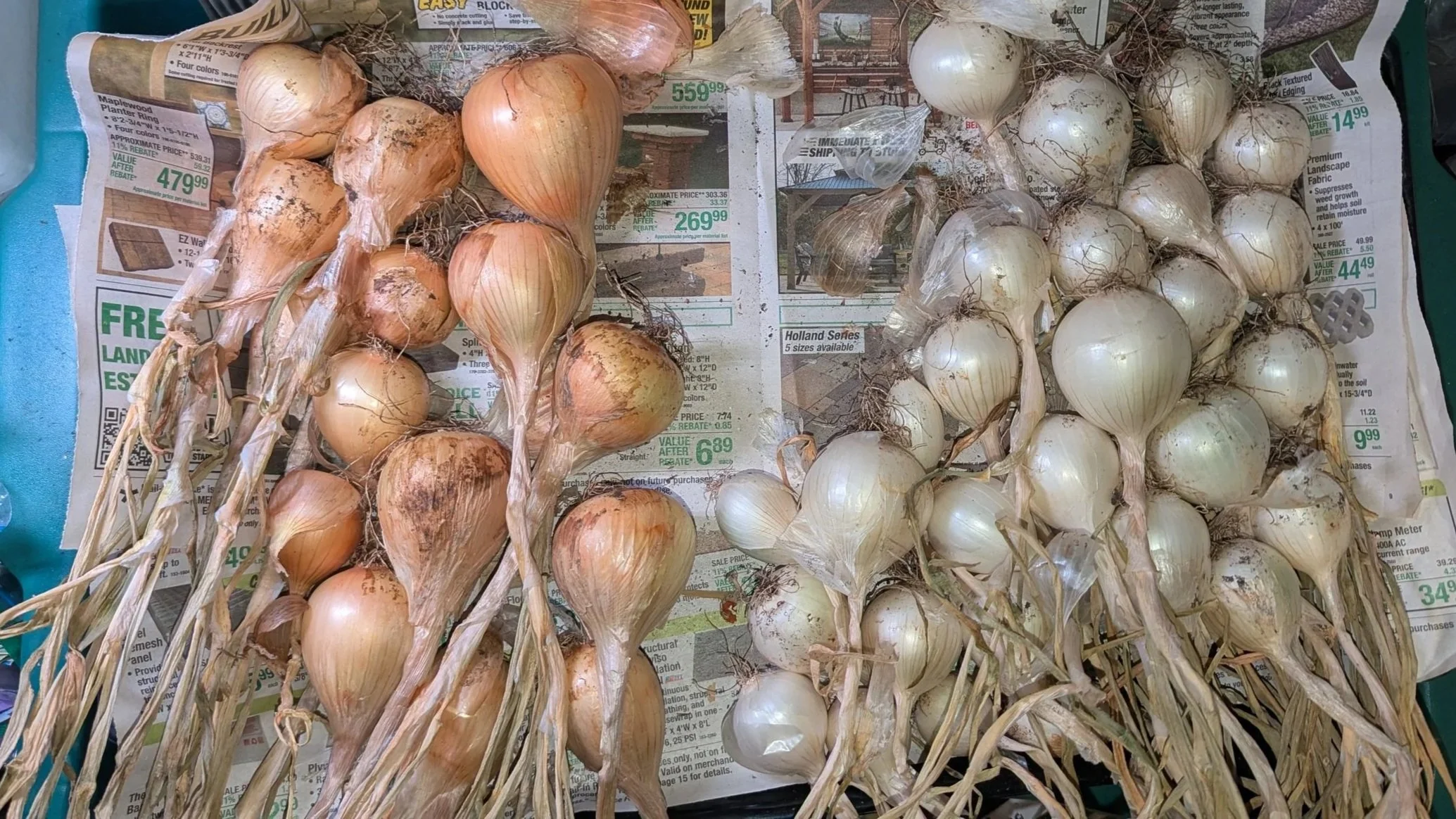
While my harvest didn't quite stretch to a full nine-month supply, it was a massive step forward. Compared to last year, I harvested roughly three to four times more onions! 🧅 While we won't have onions for the entire nine months, this batch will comfortably sustain us for over three solid months. ✨ We got some great, decent-sized bulbs, alongside a few tiny baby bulbs. Progress is progress, and I am so thrilled with the direction things are heading! 📈
Take a peek at this year's harvest resting on the newspaper in the attached picture below—about 45 onions in total, featuring a wonderful mix of white Sierra Blanca’s and yellow Walla Walla’s! 📸
Lessons Learned: What the Garden Taught Me This Season
Every season brings new lessons, and this year’s onion experiment gave me plenty to reflect on:
Sunlight Matters☀️: I planted about 90% of my first round in a dedicated circular raised bed. However, because that bed sat behind my cabbage bed and adjacent to a raised bed full of broccoli and collards, it ended up getting shaded out more than I anticipated. Onions love full, direct sun!
Soil Compaction vs. Heavy Rains 🌧️: We experienced periods of intense, torrential downpours this season. That heavy rain caused the soil in that particular bed to pack down tightly, making it tough for the bulbs to expand freely—even with my best efforts to gently spoon dirt away from them.
Nutrition Was on Point 🌿: On the bright side, my fertilizing schedule—feeding them a nitrogen-rich fertilizer every week or two—worked wonderfully, so I know nutrition wasn't holding back the bulb size.
What I Plan to Do Differently Next Year
Gardening is all about tweaking your strategy and trying again, so I’ve already got a solid game plan for next season:
Smart Crop Rotation 🔄: I’m swapping my garden beds! Next year, I plan to plant my onions in the bed where my cabbages usually go, giving them much better, unobstructed access to direct sunlight.
Fluffier, Loamy Soil 🪴: To combat soil compaction from heavy rains, I’m going to heavily amend the bed’s existing soil with coco coir or peat moss, plus perlite. This will create a light, airy, well-draining environment where bulbs can swell up without resistance.
Exploring New Varieties 🌿: I’m planning to trial a couple of brand-new onion varieties next season to see what performs best in our microclimate! I can’t wait to share these with you!
Want to take a closer look at my onion journey and watch the cured harvest reveal? Check out my YouTube video here! 🎥✨
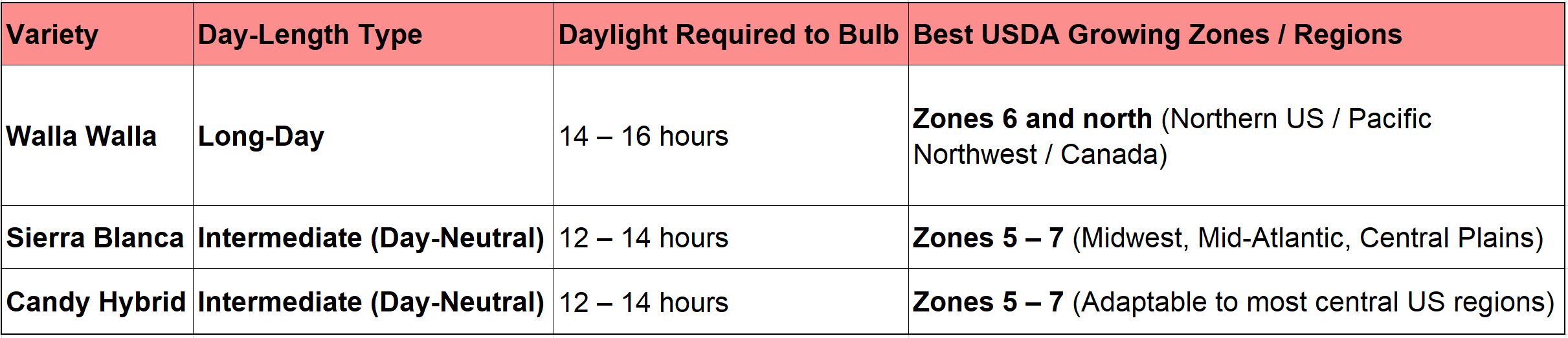
Here is a breakdown of the three onion varieties I grew, including their day-length requirements and best growing zones:
Onion Day-Length Guide:
Long-Day Varieties (Walla Walla): Triggered to form bulbs when summer days reach 14–16 hours of sunlight. They perform best in northern climates where summer days are long.
Intermediate / Day-Neutral Varieties (Sierra Blanca & Candy Hybrid): Form bulbs with 12–14 hours of sunlight. These are extremely versatile and tend to do very well across central regions, as well as transition zones.
Short-Day Varieties: Triggered to bulb with 10–12 hours of sunlight. These are suited for Southern climates (Zones 7 and south) where days remain shorter year-round and are typically planted in autumn for a spring harvest.