Here to help you grow with confidence.
WelcomeHey Friends! If this is your first time stopping by, I’m so glad you’re here!
Today, I'm giving you a sneak peak into an ongoing series where I share honest, real-talk reviews of new plant varieties I’ve tested in my growing spaces throughout the season. Today, we are diving into a very special flower that I was finally able to get my hands on earlier this year: a stunning, unique variety of black-eyed Susan that isn't yellow or orange... this one actually blooms in the most breathtaking, bright shade of white. Read more below!
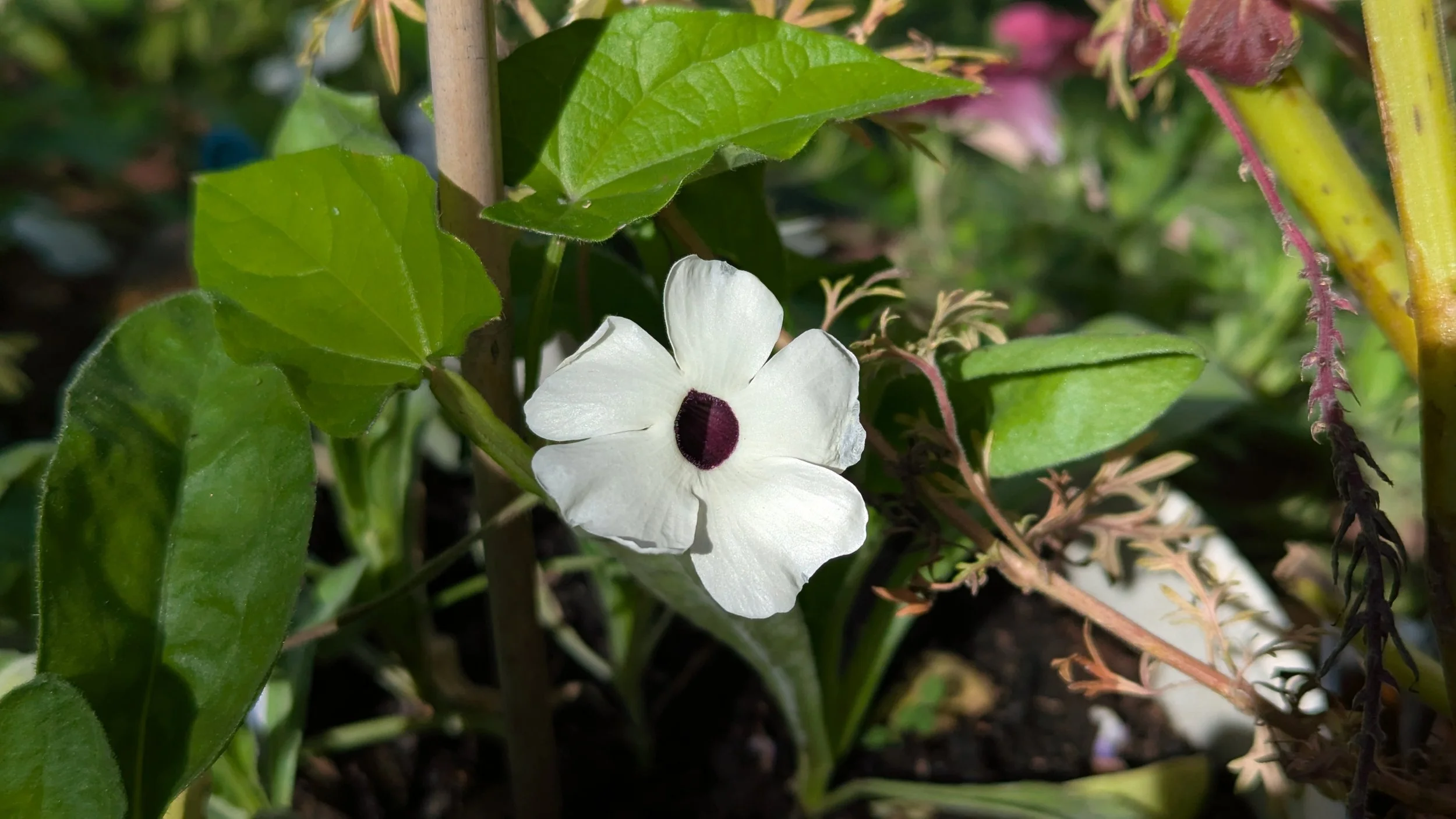
In the past, I’ve had a tough time finding seeds for this variety online. After multiple failed attempts and sold-out restocks, I finally secured a packet earlier this year to test in my own garden. The variety is officially called White Black-Eyed Susan (Thunbergia alata white / Black-Eyed Susan Vine).
Here is how it performed in my garden, what I loved about it, and the key tips I learned along the way for growing and maintaining it!
What Makes This Variety So Special?
Dainty, Striking Blooms: Features dainty, bright white-to-creamy petals surrounding a profound, dark chocolate (purple-black) eye.
Vining Habit: Unlike traditional bush-type black-eyed Susans, this is a fast-climbing or trailing vine that grows 5 to 8 feet tall.
Two-Season Enjoyment: It blooms continuously from mid-summer straight through to the first fall frost, letting you enjoy its beauty across two seasons!
Seed Starting & Germination Experience
I started my seeds indoors early in the season, and it definitely came with a learning curve:
Round 1 (Mid-March): I sowed my first round directly into seed trays without any seed prep and got 0% germination.
Round 2 (Mid-April): I tried again, but this time I nicked the seeds (nicking or breaking off a tiny piece of the tough outer seed coat before sowing). That simple step did the trick, and I was able to get a couple of seeds to germinate successfully!
💡 Seed Starting Tip: If you're starting White Black-Eyed Susan from seed indoors, always nick or lightly score the outer seed coat first! It makes a massive difference in breaking seed dormancy and boosting germination rates.
Garden Performance: How Did It Do?
I planted my starts out into the garden in mid-May.
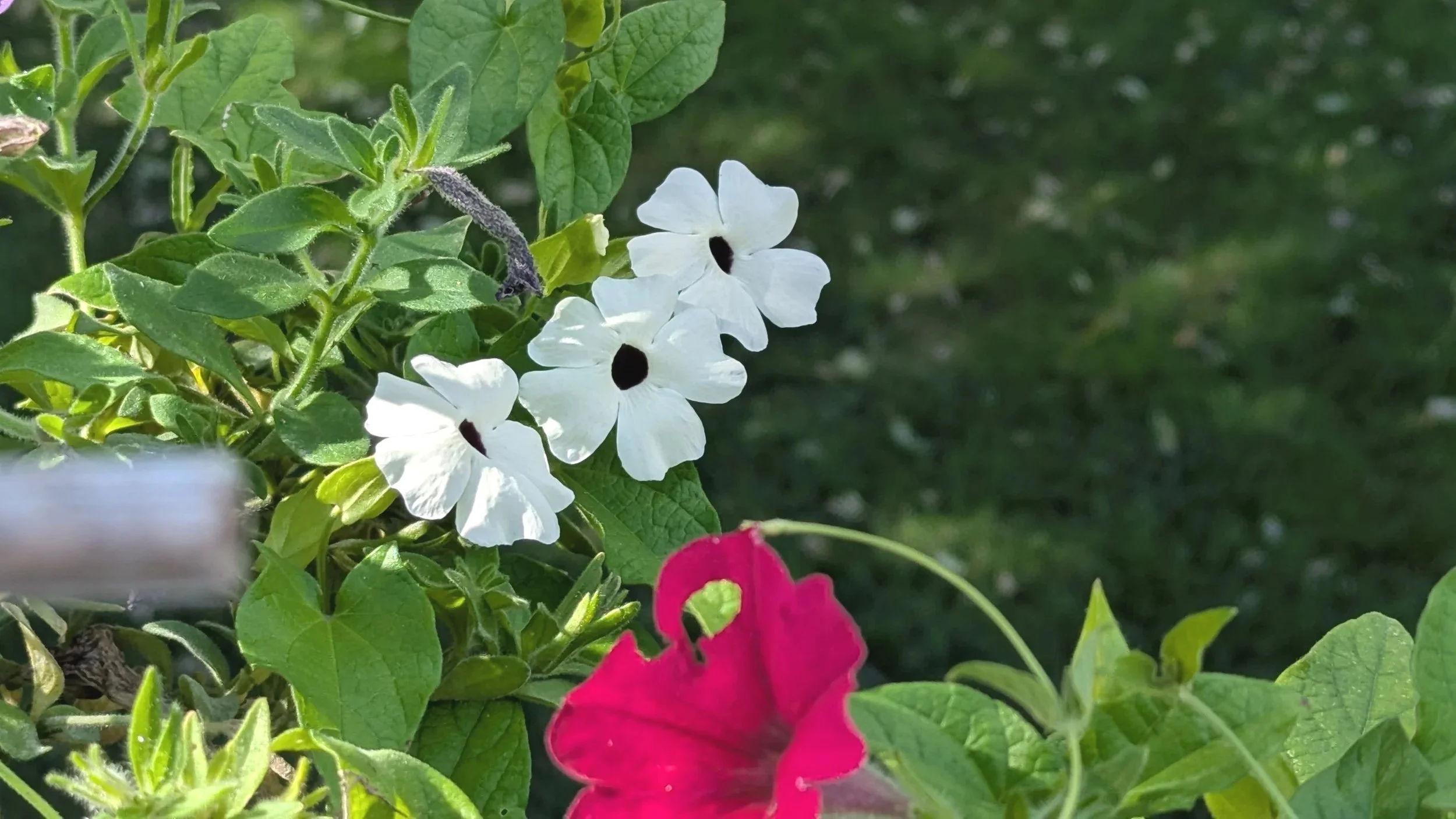
Slow Summer Start, Explosive Fall Growth: Early on, the plants were quite slow to take off during the high summer heat. However, once the weather began to cool down, they took off and started growing and spreading very rapidly! It is definitely a fast grower when temperatures are mild.
Give It Room to Breathe: I planted mine in two spots where they had to fight for space alongside a few other varieties. Once those neighboring plants were cleared out, the vines really took off and started climbing like crazy!
It Loves to Climb Upward: I tried training one plant to grow as a trailing vine, but it continuously wanted to reach upward. Now that it has space, it is happily twining up a nearby cucumber trellis and reaching onto neighboring plants.
Key Takeaways & What I’m Doing Differently Next Season
Nick the Seeds: I will definitely scarify/nick all seeds prior to sowing indoors to improve overall germination yields.
Plant Multiple Transplants Together: To get that super full, lush, blanketed effect seen in advertised plant catalog photos, you need to plant multiple plants together in one growing space. Next season, assuming better germination, I will plant several starts per spot for maximum impact!
Provide Upward Support for Trailing: If you want to grow this as a trailing plant in hanging baskets or containers, you still need to give it something to grab onto near the base; otherwise, it will naturally seek structures to climb upward.
Quick Plant Care & Growing Profile
Height / Habit: Fast-climbing or trailing vine reaching 5 to 8 feet.
Bloom Time: Mid-summer straight through to the first fall frost.
Flowers: ~1.5 inches wide, white to cream petals with a dark purple-black center.
Light Requirements: Thrives in full sun to partial shade. Preferably give it a little afternoon shade in very hot climates. (Mine received full morning sun and dappled afternoon shade, which worked great).
Soil Preference: Rich, evenly moist, and well-draining soil.
Support Needed: Requires a trellis, netting, fence, or structure to twine around.
Best Uses: Perfect for trellises, fences, light posts, containers, rail planters or hanging baskets.
Hardiness: Grown as a tender perennial in USDA Zones 10–11, but cultivated as an annual in cooler regions. It isn't hardy in my zone, but I plan to leave it in place over the winter just to see what happens!
Free Indoor Seed Demo & Care Guide Coming Soon!
I will be sharing a step-by-step video demo on how to properly prep and sow this type of seed indoors, along with follow-up instructions on caring for the seedlings once they develop their first set of true leaves. Keep an eye out for that demo!
Happy Growing!🪴