The Fall Crops Have Been Planted! (At Least Most of Them)
By TigreBlume
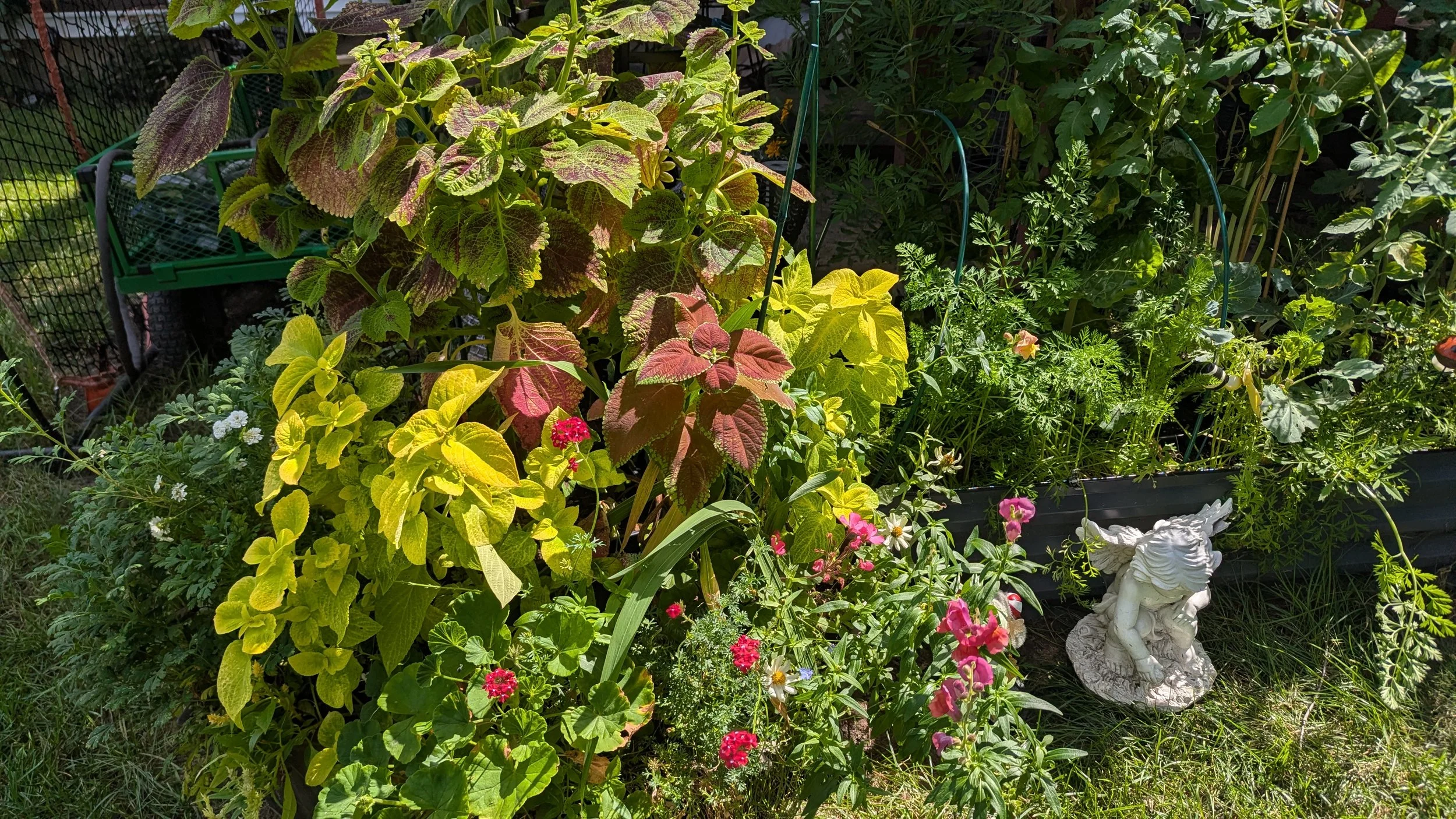
Courtesy of TigreBlume.
There is a sweet, quiet beauty in this transitional time of year. As the days begin to shorten, I find myself taking extra moments to soak in every last bit of the vibrant summer garden—enjoying the final flushes of warm-weather crops while slowly, intentionally ushering in the cool season. The air is starting to shift, and with it, the garden is beginning a whole new chapter.
Over the last few weeks, I’ve been steadily filling my garden beds and containers with my fall starts. Truth be told, I probably could have let a few of them hang out in their seed trays and nursery pots just a little longer to develop another set or two of true leaves. But at this point in the season, I decided it was best to go ahead and get them into the dirt! Getting them transplanted now allows them to establish strong root systems while the weather is still mild, while soaking up all those rich nutrients in the soil before temperatures drop.
Here’s a recap of everything that has found its home in the garden for fall!
Gypsy & Green Magic Broccoli
Although I don’t mind the taste of store-bought broccoli, there is truly nothing quite like the sweet, tender flavor of home-grown heads. This is my first year growing both the Gypsy and Green Magic varieties. They did incredibly well for me during the summer months, and I can’t wait to see how they perform in the crisp fall air.
Where They’re Planted: I planted 8 of them in my 4x3 raised bed, spacing them about 12 inches apart vertically and horizontally since they get quite large. I also tucked 7 into individual 7-gallon fabric pots so their roots have plenty of breathing room, plus 5 more into one of my in-ground beds.
📹 Watch the Harvest: Want to see how my early-season broccoli performed? Check out my summer harvest video on YouTube here!
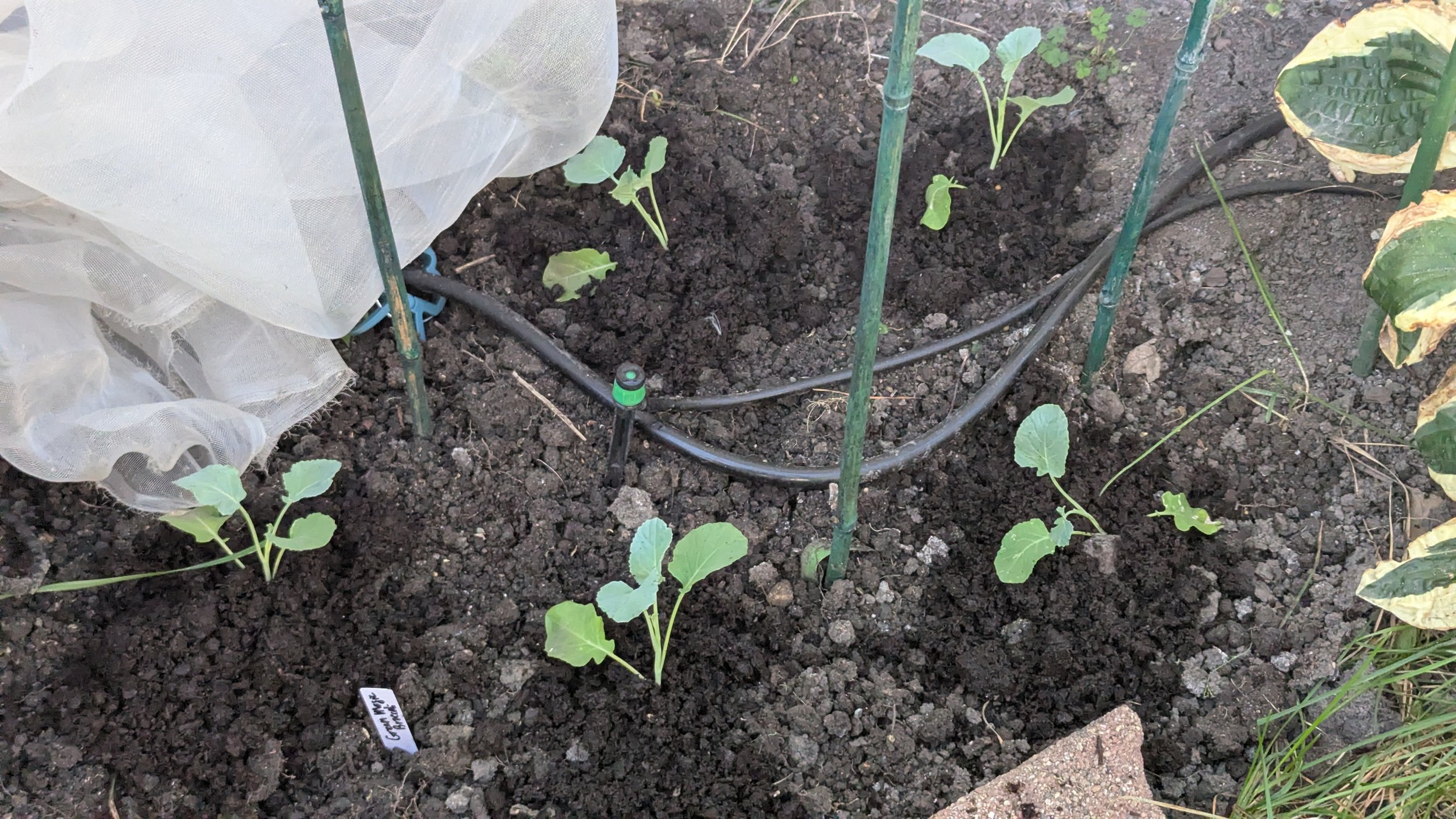
Broccoli starts planted in a tilled garden bed. Courtesy of TigreBlume.
Georgia Southern Collards
Growing collards in both summer and fall is a non-negotiable tradition for me. Whatever we don’t eat fresh gets blanched and tucked into the freezer—making them ready to be incorporated into our cozy autumn and winter holiday meals. They thrive so effortlessly in cool weather, and I’m looking forward to stocking our freezer supply even further.
Where They’re Planted: I planted 3 in one of my circular raised beds (spaced about 6 inches apart) and tucked a few more into fabric pots, for a total of 6 healthy plants.
Gardening Lesson: It’s always important to keep growing the tried-and-true crops you know you have success with, but never let that comfort stop you from experimenting with new varieties along the way!
Flash Collards
Speaking of experimenting, this was my first year trying the Flash Collard variety, and boy, are they productive! The leaves are slightly denser than Georgia Southern, but the flavor is just as rich and delicious. After a fantastic yield from my summer crop, I’m excited to see what this fall planting produces for the freezer.
Where They’re Planted: Right now, I have about 7 planted in individual pockets of my Greenstalk planter. It’ll be an interesting experiment to see how their yield compares in a smaller vertical planting area versus the raised beds and fabric pots I used during summer. Once I clear out a few spent pepper plants, I plan to fill the remaining Greenstalk pockets with my leftover Flash Collard starts!
Nimba Zucchini
This is easily one of my favorite zucchini varieties to grow! I sowed two seeds indoors and had just one germinate this time around—which is honestly more than enough for a fresh fall harvest. My summer zucchini yield wasn't great, but I’m keeping my fingers crossed for better luck now that pest pressure is easing up.
Where It’s Planted: I transplanted it into a deck container right alongside some Tetra Dill. Nimba does surprisingly well in containers as long as you stay on top of a regular liquid fertilizing routine to replenish nutrients lost from frequent watering. Plus, the dill acts as a wonderful companion plant to help keep unwanted pests at bay!
Gardening Lesson: If a crop doesn't perform well the first time around, don't give up! Dust off your hands, adjust your strategy, and give it another shot when conditions change.
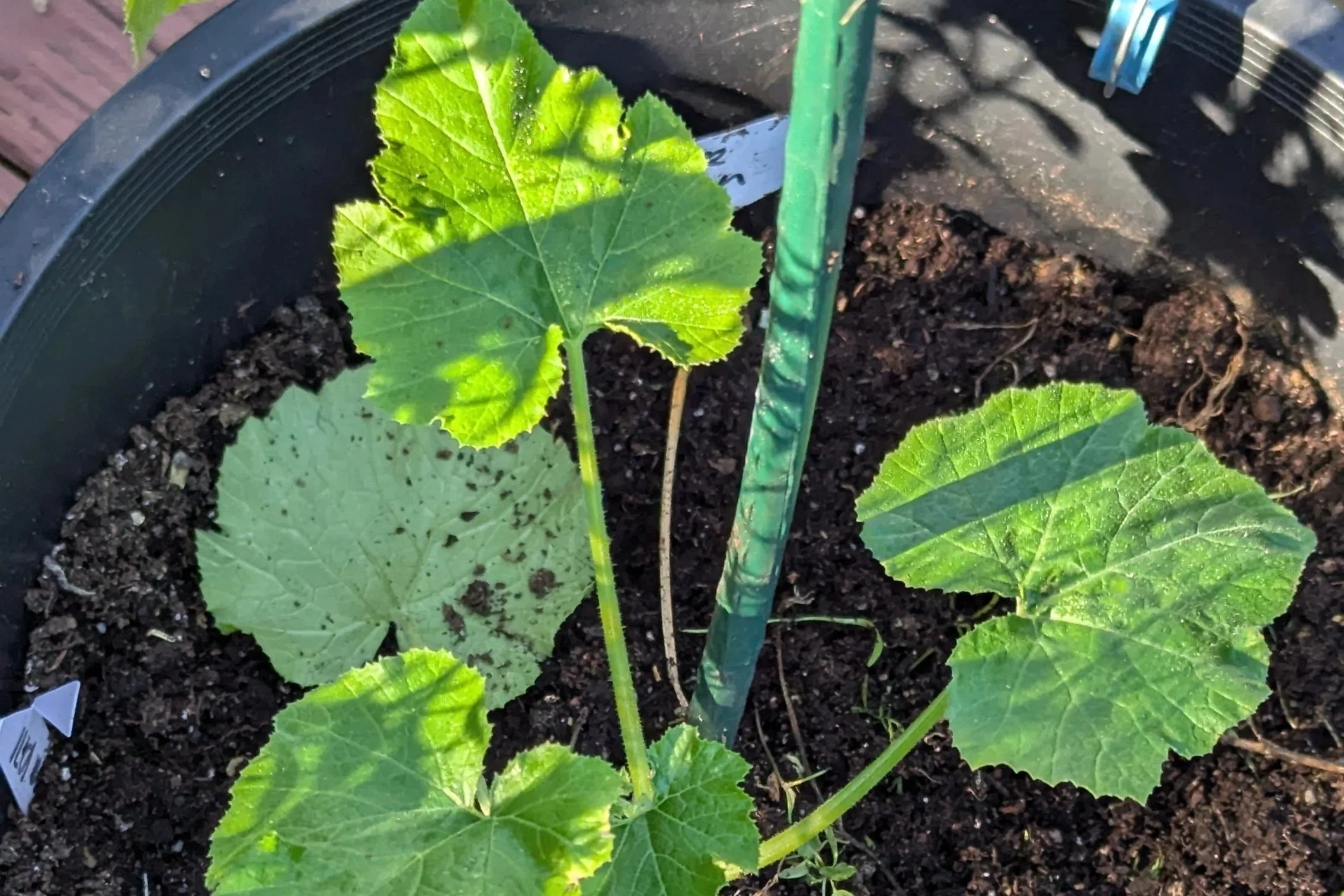
Young Zucchini plant in a container pot. Courtesy of TigreBlume.
Red Lettuce Leaf Basil
This time around, I decided to plant a brand-new variety called Red Lettuce Leaf Basil, and it is easily one of the most beautiful shades of basil I have ever seen! Most of the starts began as a deep, rich purple (with one surprise bright green plant in the mix), but they have now developed the most gorgeous deep burgundy variegated color. I am super excited to sample the flavor and hopefully preserve a big harvest for future use in the kitchen.
Where It’s Planted: So far, I’ve settled a few starts into a small container on my deck garden's herb rack. Once I clear out a pepper plant currently residing nearby, I intend to plant the remaining starts in another deck container!
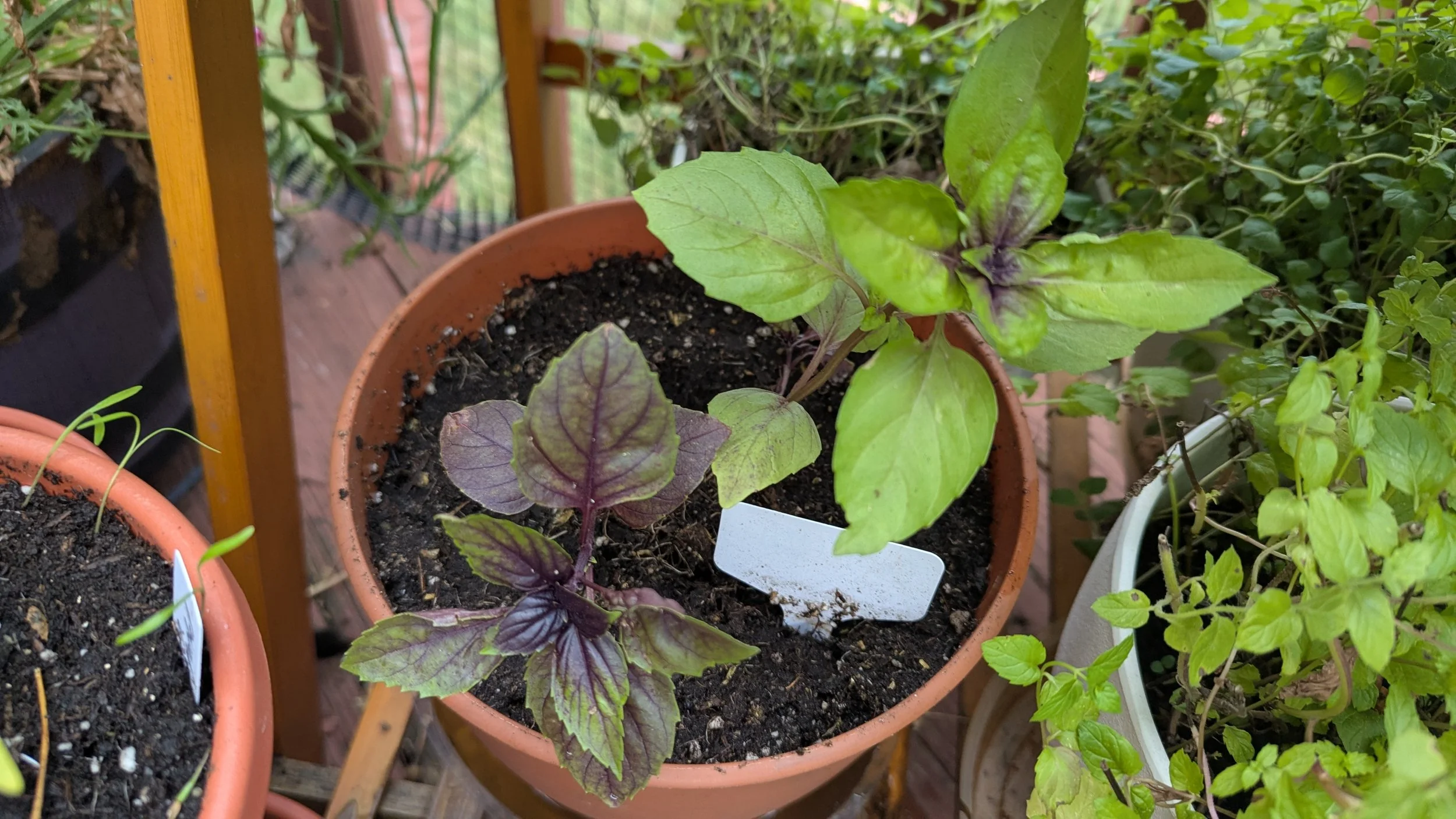
Young basil plants tucked into a terracotta colored garden pot. Courtesy of TigreBlume.
Waltham Butternut Squash
This is my very first time growing butternut squash, and I’m so eager to see how it takes off. My mouth is already watering at the thought of making homemade savory butternut squash soup or roasting it with warm spices!
Where They’re Planted: I ended up with two healthy transplants and placed them in a raised bed fitted with two climbing trellises. Since butternut squash loves to climb, vertical trellising is going to save so much space. Right now, the young transplants are actually enjoying some light shade provided by the mature tomato plants in that bed—and once I pull those tomatoes, the squash will have full access to the fall sun.
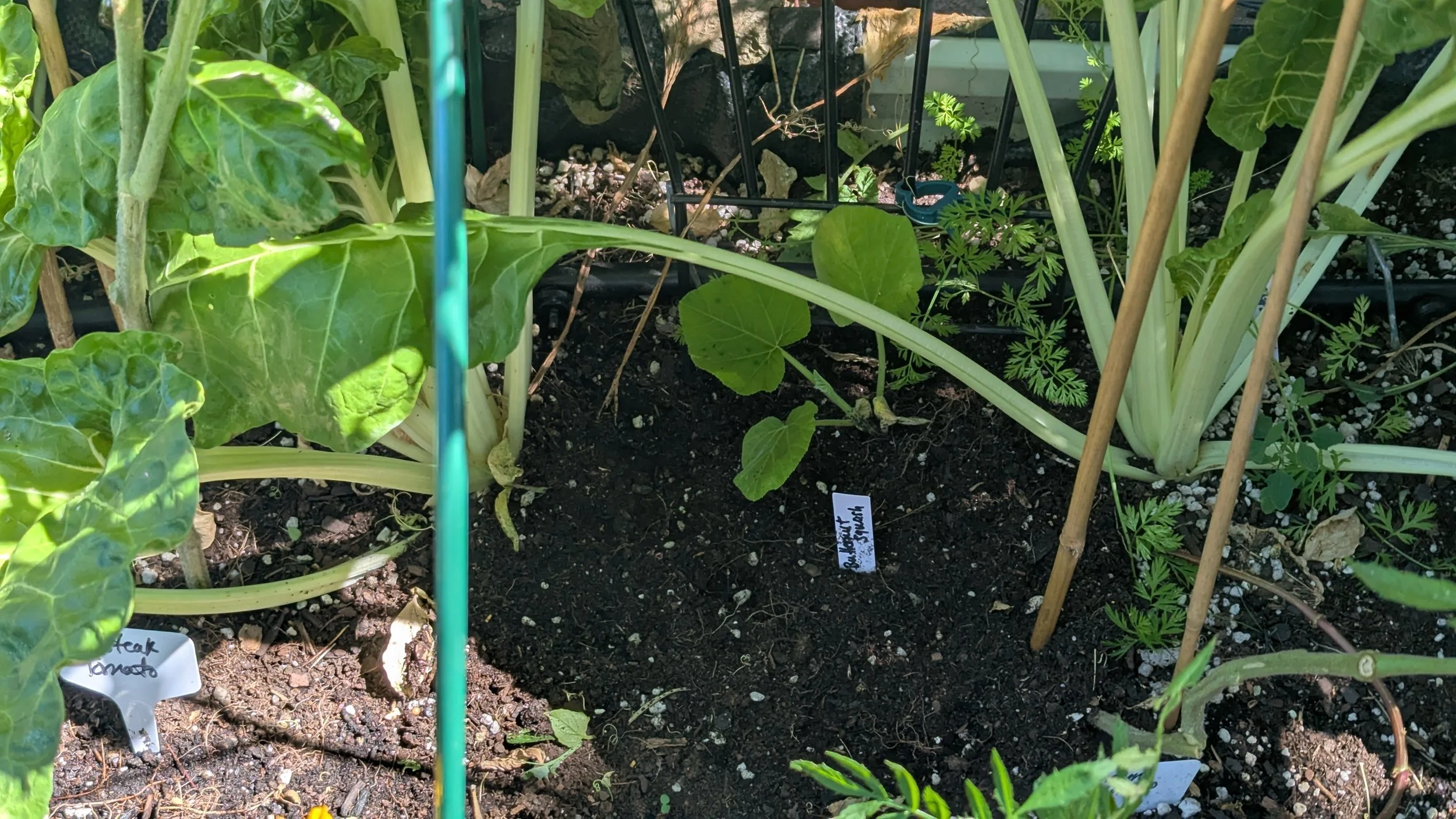
Young butternut squash plant planted in a raised garden bed, alongside brassicas. Courtesy of TigreBlume.
Batwing Pumpkin Mix
So… I strictly said I was not going to grow pumpkins this year. They tend to be a bit high maintenance when it comes to monitoring for squash bugs and vine borers. But I couldn't resist giving this fun mix a try! I sowed a few seeds in my grow room and thought they were duds after 3 to 4 weeks with zero signs of green. But just as I was about to give up, tiny sprouts popped up! So, I guess I’m growing pumpkins after all!
Where They’re Planted: Tucked in and growing in a deck container! We’ll see if we get any cute pumpkins before the first hard frost arrives.
Gardening Lesson: Patience is everything in gardening. Nature works on its own timeline, not ours!
Cucumbers: Beit Alpha & Homemade Pickling
I brought back my absolute favorite—the Beit Alpha Cucumber—which is perfect for fresh salads and quick refrigerator pickles. I’m also trying a new-to-me variety called "Homemade Pickles," which promises high yields perfect for canning homemade pickle jars to store in the pantry.
Where They’re Planted: Most are settled into containers in the deck garden, and I plan to tuck my remaining couple of starters into containers near my tomato and pepper raised beds.
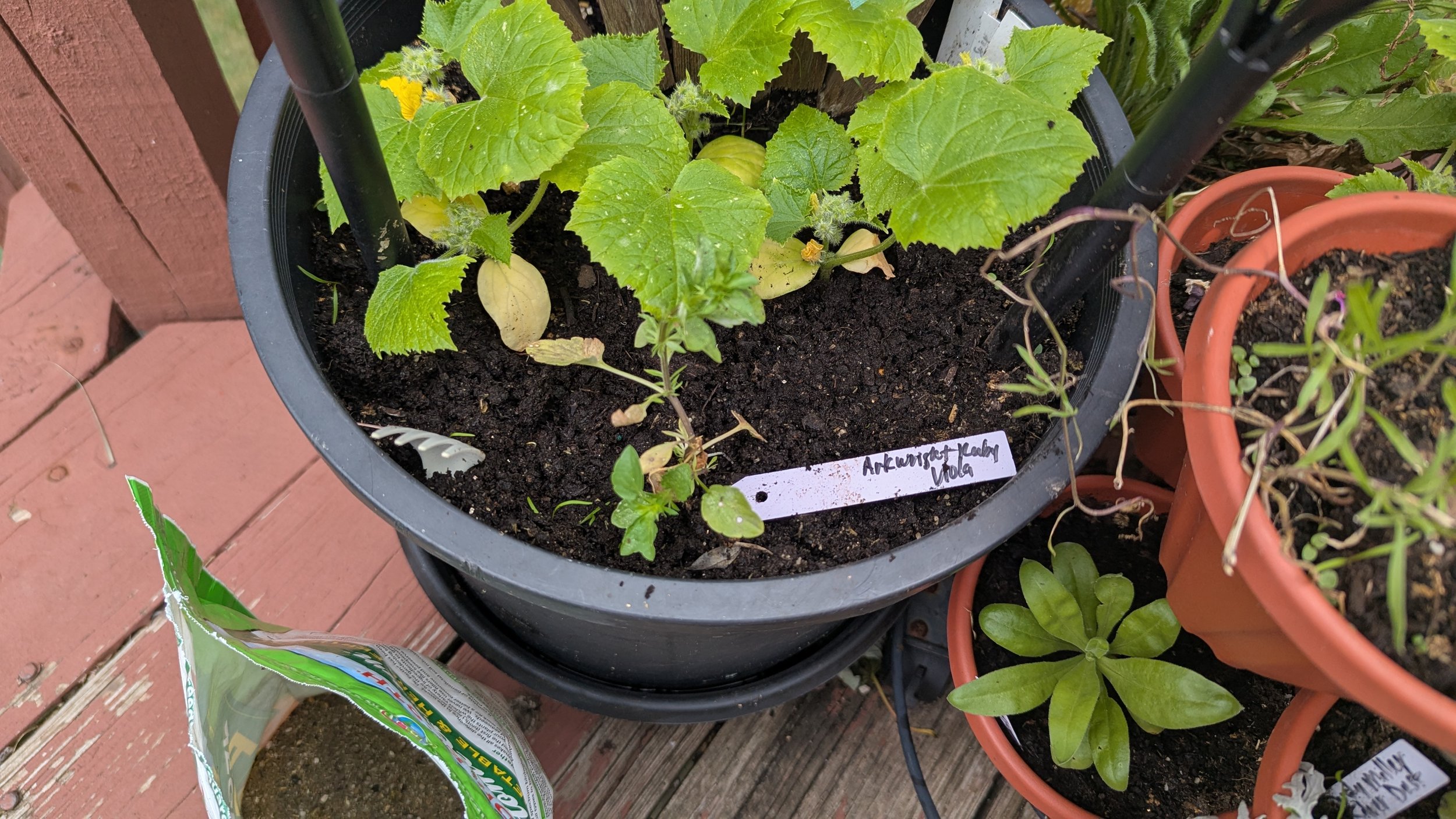
Young cucumber seedlings planted in a black container pot. Courtesy of TigreBlume.
Direct-Sown Successions: Bush & Pole Beans, Carrots, & Radishes
I direct-sowed my next round of Gold Rush Bush Beans, Blue Lake Pole Beans, Kurado Carrots, and Cherry Belle Radishes. My spring carrot harvest was decent, but I’m hoping this fall batch yields even larger roots. Heat ruined my early summer radishes, so I’m praying for a few crisp handfuls this time around!
Where They’re Planted:
Carrots & Radishes: Direct-sowed in the same raised bed as the Butternut Squash and Swiss Chard.
Bush Beans: Started in a medium nursery pot on the deck, then transplanted into a circular raised bed alongside some onions.
Pole Beans: Direct-sowed into a deck container; they’ve already sprouted and are happily twining up their trellis!
Onions: Blush & Patterson
I’m trying two new onion varieties purely to harvest their tender green tops for freezer storage. I’m also treating this as an experiment to see how much growth I can get before cold weather settles in, which will help me fine-tune my late-summer planting schedule for next year.
Where They’re Planted: I planted about two dozen of each variety into one of my circular raised beds.
Gardening Lesson: Never be afraid to plant "too late" or experiment outside the standard calendar. Even if a crop doesn't fully mature, the knowledge and observations you gain are invaluable for future seasons.
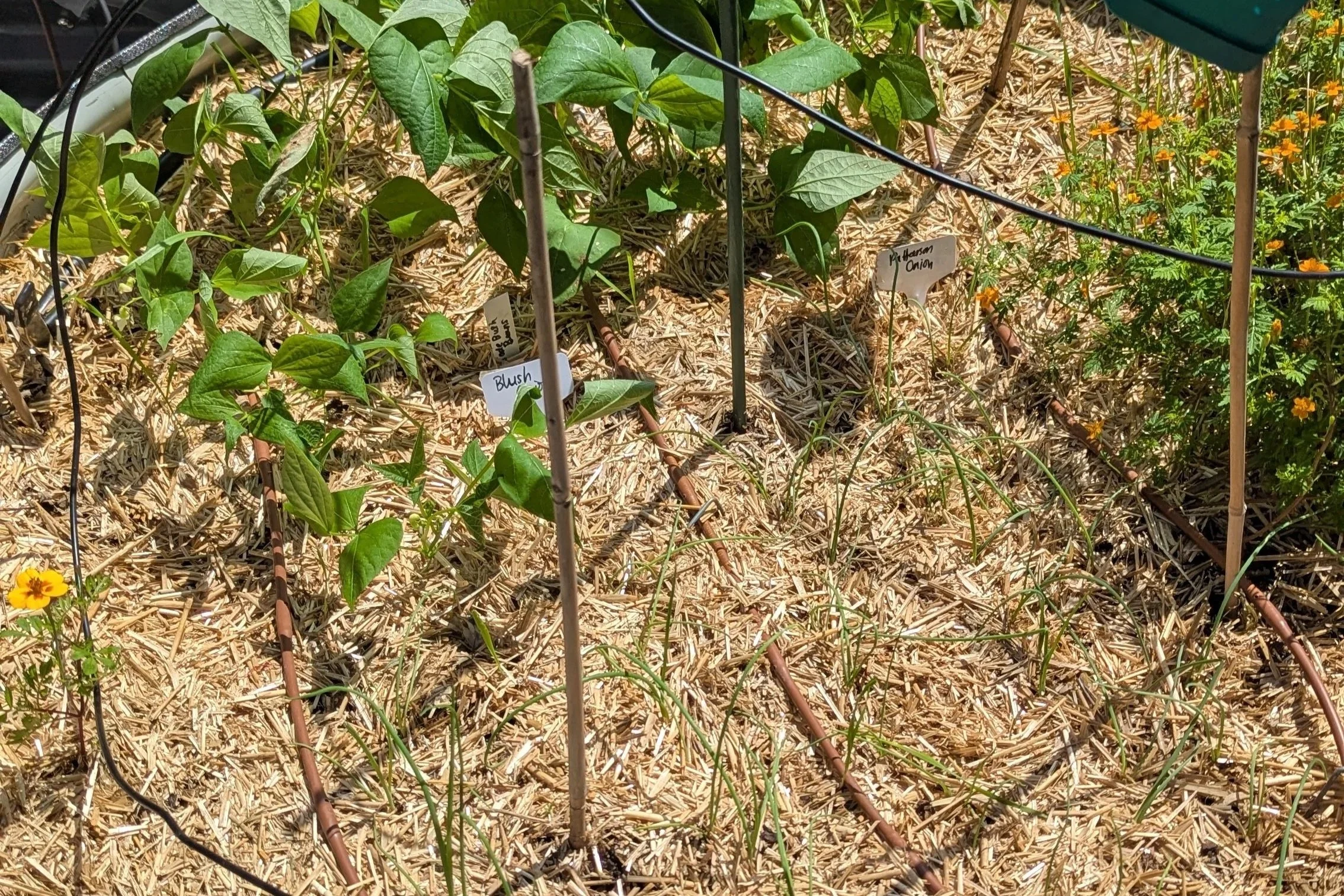
Bush bean and onion seedlings planted in a raised garden bed. Courtesy of TigreBlume.
Cabbage, Kale, & Pak Choy
You can't have a fall garden without favorite brassicas! I’m growing Early Jersey Wakefield Cabbage, Nero Toscana Kale, and Pak Choy. Since I harvested so much cabbage earlier this year (enough to last us through winter!), I only planted a few starts for fall.
Where They’re Planted: All tucked into a circular raised bed alongside the Georgia Southern Collards.
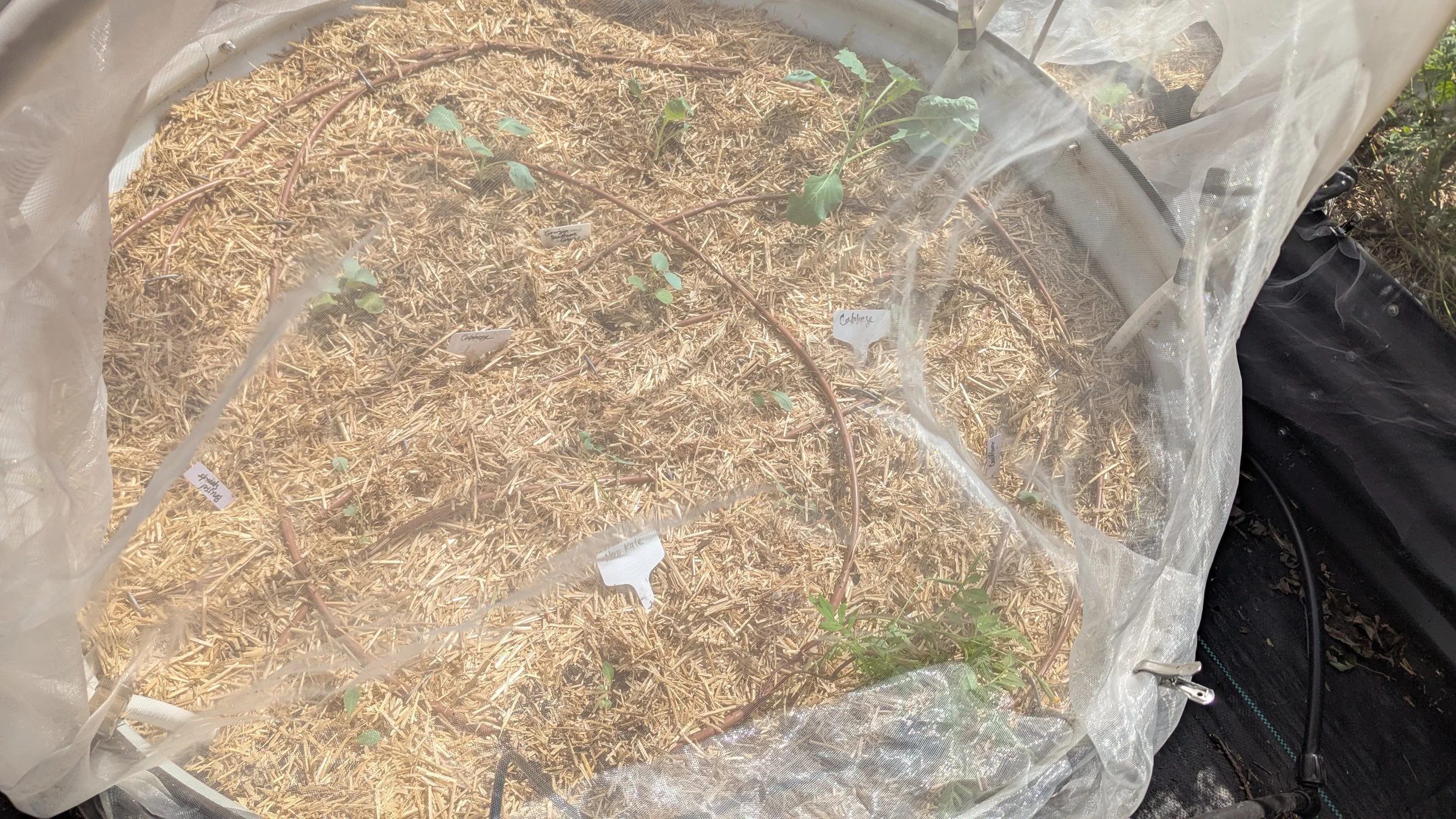
Young brassica and leafy green vegetables planted in a raised garden bed. Courtesy of TigreBlume.
Cauliflower
A few weeks ago, I harvested a magnificent head of cauliflower after watching it mature very slowly in a fabric pot. I sowed a few more seeds indoors for fall, but knowing how long they take, I’m not 100% sure they’ll head up before frost. Either way, it's a fun experiment to test their tolerance!
🍿 Watch the Short: Check out my satisfying cauliflower harvest YouTube Short right here!
Fall Flowers: Blanket Flowers, Marigolds, Zinnias, Lobelia, Pansies, Calendula & Sweet Alyssum
Flowers are a non-negotiable in my garden during spring and summer—and fall is no different! I started these varieties to fill empty container gaps, replace spent summer plants, and act as companion plants in my vegetable beds. About half are planted, and I hope to get the rest in the ground before the official first day of fall!
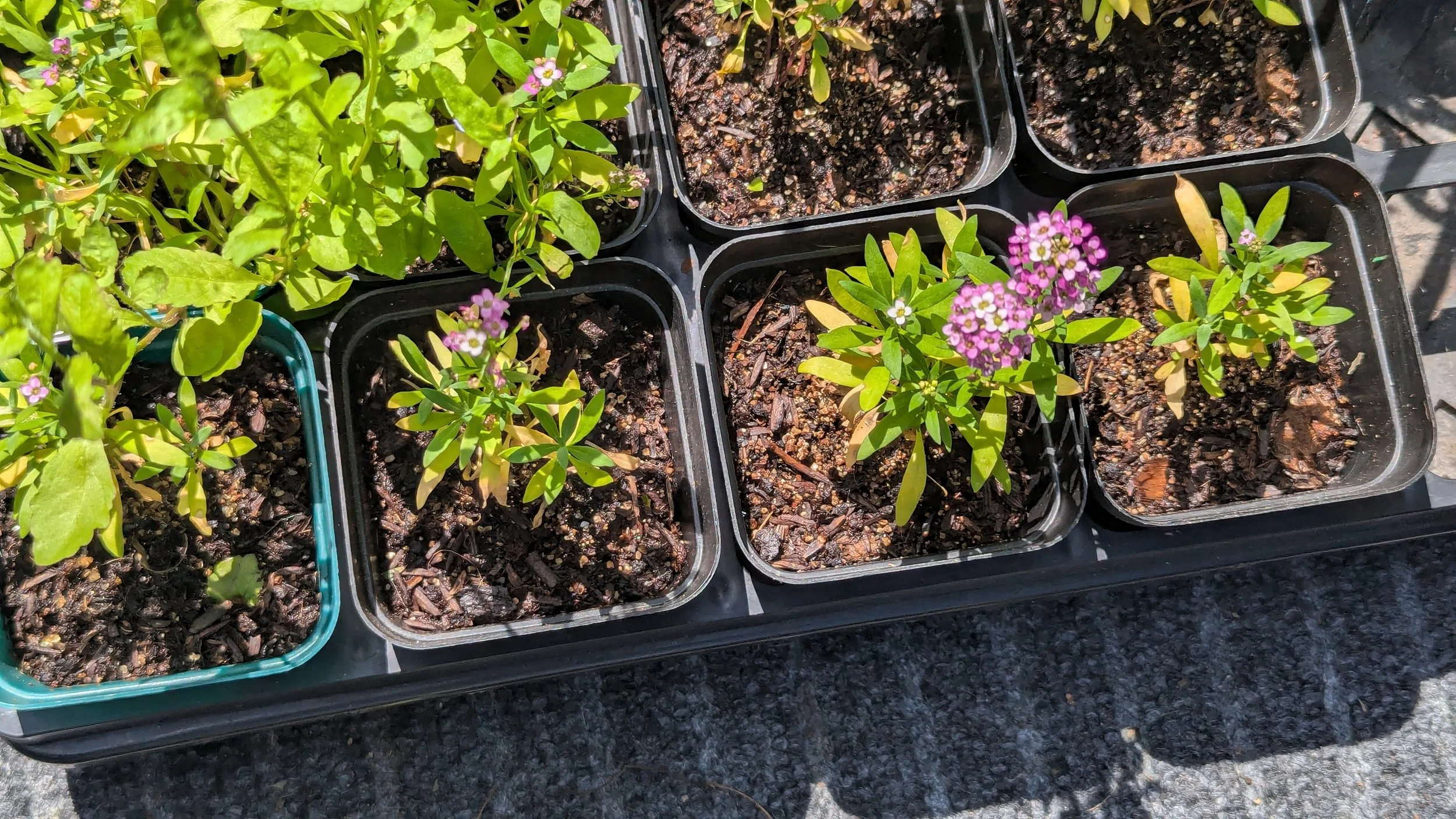
Tray of young flower seedlings. Courtesy of TigreBlume.
Wrapping Up
There are still a few starts that I need to plant, but standing back and seeing the garden transition into this next phase brings me so much joy. Gardening in small spaces is a continuous journey of experimenting with unconventional planting methods, trying new varieties, and learning as we grow.
I’d love to hear from you—what are you growing or harvesting in your garden as the seasons shift? Drop a comment below and let’s chat!
If you want to follow along with video tours, small-space tips, and all the everyday updates from my self-sufficiency journey, be sure to head over and subscribe to my YouTube Channel.
Happy Gardening! 🌾🌱
